
AI is everywhere now. It’s in apps, websites, and smart speakers at home. But most people don’t notice the little things that make it work well. One of those things is meta in AI. It might sound fancy, but it’s really simple. It’s like giving AI a little extra clue about the data it sees.
Meta AI applications are becoming very useful. AI will be smarter, faster, and safer if it understands the context of the information it uses. By 2026, this won’t just be optional—it will be how AI works best.
In this blog, I want to explain what meta in AI really is, why it matters, some cool trends for 2026, and how businesses can use it. I will also cover meta-learning in AI and meta learning algorithms in simple terms, with examples you can understand.
What is Meta in AI?
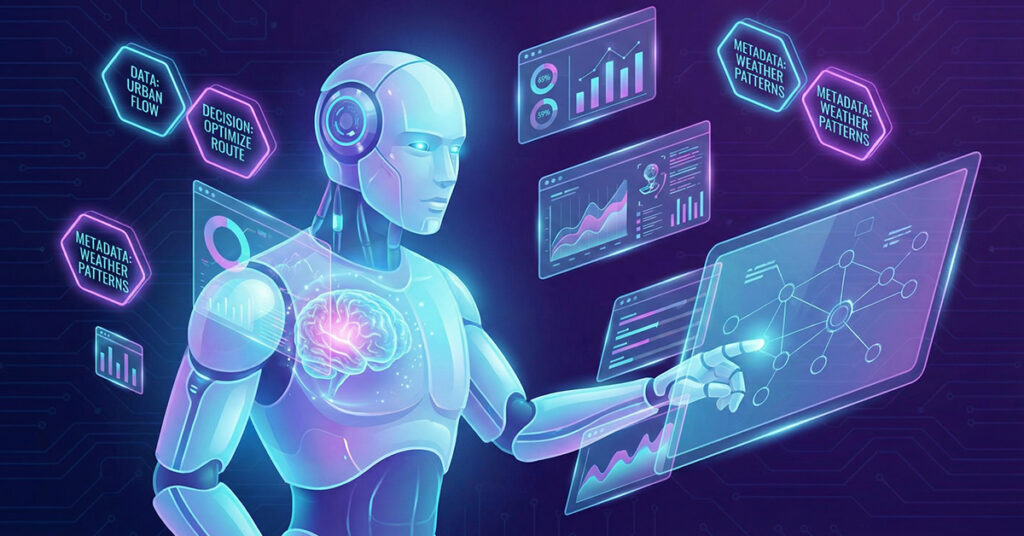
What does meta in AI really mean? Imagine you have a photo of a cat. The photo itself is just pixels. But if you add extra info like “cat,” “furry,” and “sitting on a chair,” AI can understand it better. That extra info is metadata.
Metadata is small bits of information that tell AI:
- What the data is about
- Where it came from
- How it can use it
- What patterns it might have
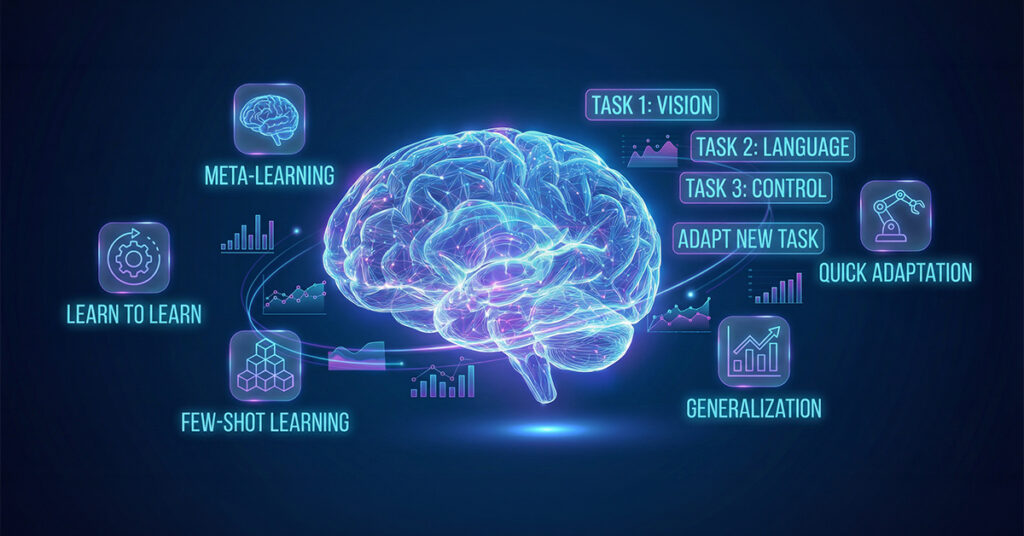
Meta-learning in AI is a bit different. Instead of just learning from data, AI learns how to learn. It’s like giving someone a shortcut to learn new things faster. For example, a robot using meta learning algorithms can figure out how to pick up new objects after just a few tries instead of starting from scratch.
Think of it this way: if you teach a child to tie their shoes, they might take ten tries to learn. But if you show them a trick on how to learn new tasks faster, they might pick up tying shoes in just two tries. That’s what meta-learning in AI does for machines.
Why Meta is Important
Why should anyone care about meta in AI? It makes AI smarter, faster, and more accurate.
1. Better Accuracy
Metadata gives AI context. Without it, AI can mix things up. For example, “apple” the fruit isn’t the same as “Apple” the company. Metadata tells AI which one to use.
2. Organizing Big Data
Companies have huge amounts of data. Without metadata, it’s just chaos. Metadata helps AI organize the data so it can find the right information quickly.
3. Faster Learning
Meta-learning in AI helps AI learn new tasks with fewer examples. For instance, a self-driving car can adapt to new obstacles on the road faster using metadata.
4. Smarter Decisions
AI with metadata can make better suggestions. For example, it can suggest clothes if it knows the weather, time of day, and season.
5. Fewer Mistakes
Metadata adds context to the data. This helps AI avoid making wrong guesses.
6. Saving Time and Resources
Metadata helps AI work faster because it doesn’t have to figure everything out from scratch. Businesses save time and money by using meta AI applications effectively.
Meta Trends in AI for 2026
Now let’s talk about what is coming in 2026 with meta in AI.
1. Automated Metadata
AI can now generate metadata automatically. Imagine an AI looking at thousands of photos and tagging them correctly without human help. This saves a lot of time and reduces errors.
2. Meta-Learning Everywhere
Meta-learning in AI is on the rise. AI can now learn to pick up new tasks quickly. Think of it like providing someone a cheat sheet to grasp new topics fast. Robots and AI assistants will become much quicker at adapting to new tasks.
3. Explainable AI
People want to know why AI makes certain decisions. Metadata helps AI explain itself. For instance, an AI can say, “I chose this option because these patterns matched the earlier data.” This is important for trust and safety.
4. Mixing Data Sources
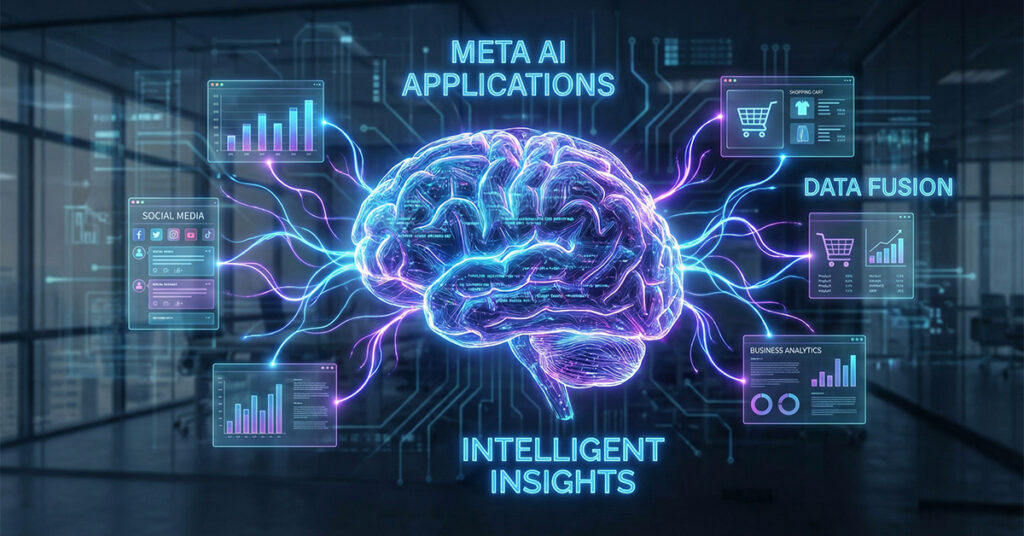
AI can use meta AI applications to combine data from different sources. For example, an online store can mix data from sales, social media, and reviews to see which products are most popular.
5. Real-Time Decisions
Metadata helps AI make choices quickly. Robots can catch moving objects, and self-driving cars can avoid obstacles right away. Real-time decisions will become standard.
How Businesses Can Use Meta in AI
So, what can your business do with meta in AI?
1. Smart Suggestions
Websites and apps use meta AI applications to suggest things people want. Services like Netflix, YouTube, and online stores use metadata to show you what you might like.
2. Customer Insights
Metadata shows what people like, when they buy, and what they ignore. Businesses can leverage this to make better offers and promotions.
3. Better Operations
Factories, stores, and warehouses can use metadata to manage things better. For instance, it can indicate when machines need maintenance or which products need restocking.
4. Predict Trends
AI can examine past data and predict what people might want next. Metadata makes these predictions more reliable.
5. Spotting Problems Early
Banks use metadata to detect fraud. They can identify unusual patterns in transactions and alert people before something bad happens.
Real-Life Examples
Here are some examples of meta-learning in AI and meta AI applications in action:
– Healthcare: AI uses metadata about patients, such as age, history, and symptoms, to suggest treatments.
– Online Stores: Metadata helps show the right products to the right customers at the right time.
– Robots: Robots use meta-learning algorithms to pick up new objects after a few attempts.
– Self-driving cars: Cars use metadata to safely detect lanes, traffic lights, and obstacles.
– Education: AI tutors use metadata to understand what a student knows and what they struggle with, allowing for faster teaching.
Best Practices for Using Meta in AI
Here are some simple tips for using meta in AI effectively:
– Always label your data correctly. Wrong labels confuse AI.
– Add context: Where did the data come from? When? How?
– Keep it consistent. Use the same rules for all data.
– Automate when possible. AI tools can help create and manage metadata.
– Update often. Old metadata is not useful.
What’s Next for Meta in AI
The future looks exciting. By 2026:
– AI will learn faster with meta-learning in AI.
– Businesses will use meta AI applications to make better decisions.
– Metadata will make AI more understandable and safer.
– AI will combine information from multiple sources for better answers.
– Everyday tools like voice assistants will become smarter due to metadata.
If your business starts using meta in AI today, you will be ready when AI gets smarter and faster.
Why This Matters
AI isn’t going away. Companies that understand meta in AI and use meta-learning in AI will save time, produce better products, and understand customers more. Even small businesses can benefit from meta AI applications.
Think of AI like a child in school. If you just give the child a bunch of facts, they will learn slowly. But if you teach them how to learn and give them extra context, they will learn faster and make better choices. That is what meta learning algorithms do for AI.
Final Thoughts
Meta in AI is the little secret that makes AI smart. When used correctly, along with meta-learning in AI, meta AI applications, and meta learning algorithms, AI can learn faster, make better decisions, and adapt to new challenges.
Businesses that start considering metadata now will have an edge by 2026. It’s not just extra info; it’s the backbone of smart, safe, and helpful AI.
Leave a Reply